Navigating China’s Creator Ecosystem: What Marketers Need to Know
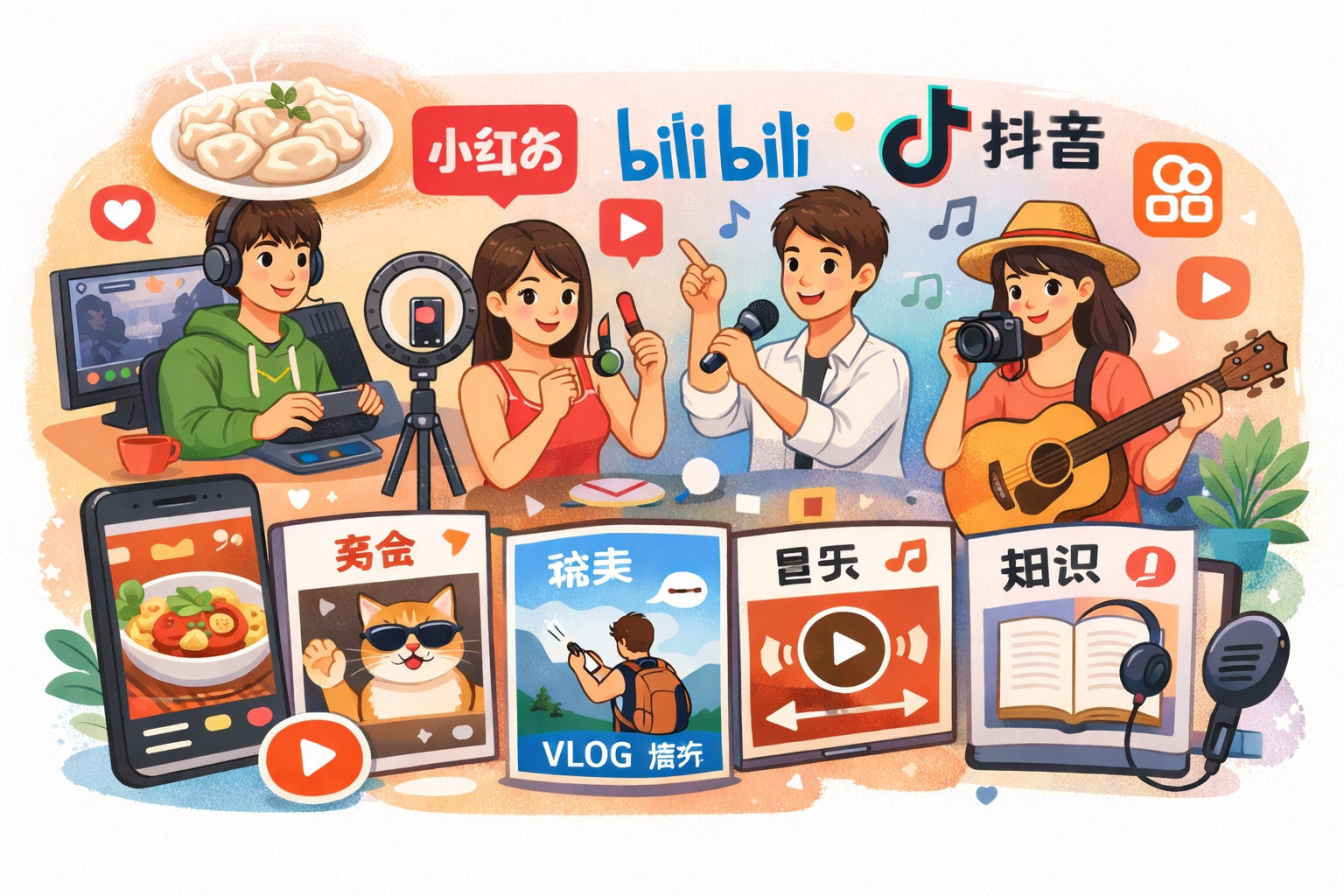
China’s social ecosystem is platform-fragmented, creator-driven, and heavily integrated with commerce. Douyin and Xiaohongshu are now core engines of social commerce and discovery, while WeChat is still the backbone of private-domain relationships and transactions.
Most Chinese social media platforms were creator within a different internet ecosystem from the Western counterparts, in a closed, mobile-first, commerce-integrated, and community-led environment. Hence, discovery on these platforms can often drive better conversions - sometimes without even leaving the app.
Xiaohongshu is sometimes described as the "Chinese Instagram". In practice, Xiaohongshu functions like a peer-led recommendation engine where users search, save, and validate decisions through detailed “notes” (posts) before they buy, book, or try anything. It’s also been historically strong with Chinese users abroad and it has been actively experimenting with broader international growth. In 2025, it unexpectedly pulled in large numbers of “TikTok refugees” and began pushing more bilingual features and overseas strategy. Although many of the "TikTok refugees" discontinued usage, when the ban did not happen.
Xiaohongshu creators are positioned more as trusted peers than 'influencers' and many use the platform to share real-life experiences with others.
Nano to Micro (1K to 5K)
Everyday professionals, parents, students, newcomers, hobbyists. High trust, niche specificity.
How to engage: product seeding + honest reviews, “try-and-share” briefs, local experience content, light usage rights.
Micro to Mid-Tier (5K to 100K)
Clear verticals: skincare routines, study abroad, immigration paperwork, outdoor gear in Canada, pet training, rental life, renovations.
How to engage: structured collaborations, serial content (multi-post), Q&A-style posts, side-by-side comparisons.
KOLs (100+)
More commercial, brand-savvy, often managed. Useful for reach, less for trust-building.
How to engage: clear deliverables, licensing, whitelisting rules, stronger compliance, higher fees.
On Xiaohongshu, authority is built through consistency and specificity, and not too aspirational. Creators gain traction by repeatedly consistently answering similar questions within a niche. Brands that try to force broad lifestyle messaging tend to struggle.
Unlike Instagram, follower count is not the main driver of reach. A creator with 2,000 followers can outperform one with 200,000 if their post answers a specific query well.
These clusters consistently show strong intent for overseas Chinese-language audiences:
At a practical level, Xiaohongshu rewards answer-quality more than popularity.
Key dynamics to understand:
Unlike Instagram where follower graph and trend participation can dominate reach, Xiaohongshu behaves closer to SEO + community proof inside a social platform.
Douyin and TikTok share DNA, but they’re not the same product, not the same market, and not the same operating rules.
For an overseas diaspora strategy, Douyin is usually not your primary channel (access, geo-fencing, and audience concentration skew mainland). But you still need to understand it if:
Douyin creators are often built around performance and monetisation. Common types:
Follower count is secondary to performance. What this means is that creators optimise hooks in the first 1-3 seconds of the content, content is iterative, and educational content must be fast and visual. This is why Douyin's content feel more “transactional” compared to Xiaohongshu's content.
Unlike TikTok, Douyin’s ecosystem assumes:
There's an overall shift towards less dependence on mega-influencers to more "store + shelf + mid creators".
WeChat is not designed for discovery, virality, or public broadcasting. Instead, WeChat functions as a closed-loop relationship ecosystem - one where content, community, commerce, and careers can coexist within a single brand-owned environment.
For overseas Chinese communities, WeChat often acts as:
WeChat creators are often community builders first:
Historically, WeChat wasn’t about virality. It was about relationships and subscriptions. Now it’s increasingly “two-speed”:
This differs from Western platforms where reach is often dominated by a single primary feed. In WeChat, your best outcomes come from designing a multi-touch system: short video → group/community → Mini Program → repeat engagement.
WeChat official accounts, especially the Service Accounts, function like LinkedIn Company Pages, the similar concept of executive thought leadership profiles, and employer brand hubs, with the ability to apply to jobs on WeChat, through mini-programmes. That's a more robust system given that it reduces friction in the application process - no redirects to other job boards or career site ATS, no need to create another account. And similar to LinkedIn, follower growth is more intentional and gradual. Content performance is driven by relevance and trust.
Culturix exists to bridge brands and creators across Chinese social platforms—especially in the overseas diaspora context, where cultural nuance and operational details decide whether campaigns convert.
What we do (end-to-end):